The Pullback Entry: Buy an Uptrend at a Discount (Swing Trading)
TL;DR
The pullback entry: in a healthy uptrend, buy the dip into the rising moving average instead of chasing the breakout. Anatomy, the exact entry/stop/target, the falling-knife trap, and a real chart.
“The pullback entry: in a healthy uptrend, buy the dip into the rising moving average instead of chasing the breakout. Anatomy, the exact entry/stop/target, the falling-knife trap, and a real chart.”Click to post on X ▸
Where this fits in the Confluence Method
This lesson lives in the Stack step of the Confluence Method, where you confirm price action and structure, a trigger and a key level before a setup qualifies as a trade.
Read the full method ▸Full transcript
6 sections0:00The safest entry in an uptrend usually isn't the breakout — it's the pullback that follows. Chasing the breakout means buying the high and setting a wide stop. Buying the pullback means getting the same trend at a discount, with risk clearly defined. Let me show you exactly how to time it.
0:18Here's the anatomy. First, an established uptrend — higher highs and higher lows, ideally with a rising moving average like the twenty or fifty-period underneath. Then a shallow, controlled pullback: price dips back toward that average, usually on lighter volume and smaller candles, because there's less conviction in the selling. The depth matters. A healthy pullback is orderly and gives back maybe a third to a half of the last leg up; a violent, deep drop that erases the whole move is a warning, not an opportunity. The key idea is that the dip is a pause that refreshes the trend, not a breakdown that ends it. Strong trends pull back to value and then continue.
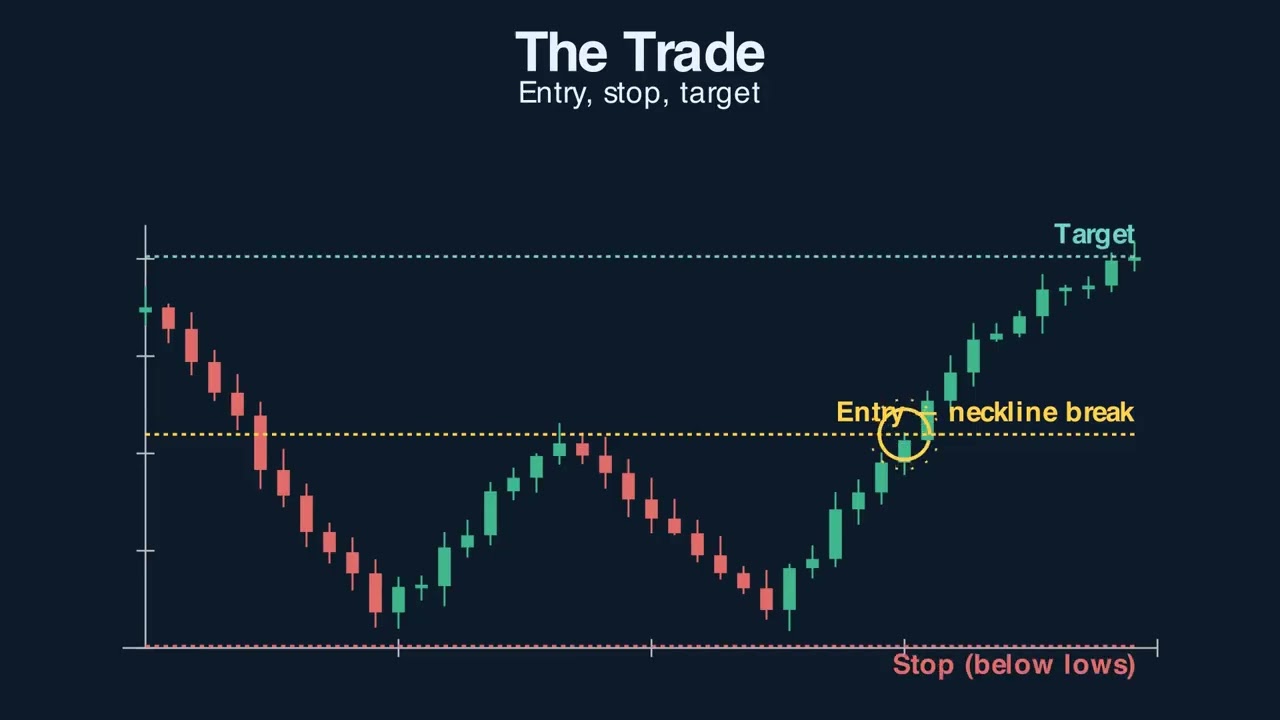
0:56This is the whole idea in one line: buy strength at a discount. You're not trying to catch a bottom or predict a reversal. You're joining a trend that's already proven itself, just at a better price and with a tighter, more logical stop than the breakout buyer ever gets. Here's the trade, step by step. You don't buy the instant price touches the average — you wait for a reversal signal there: a hammer, a bullish engulfing candle, or a reclaim of a small intraday level. That confirmation is your entry, around one hundred and eleven. Your stop goes just below the average and the pullback low, near one hundred and eight, because a clean break of that zone means the pullback has become a genuine reversal and your reason for being in the trade is gone. Your target is the prior swing high, and if momentum is strong, a measured extension beyond it. Because your risk is just the shallow pullback while your reward is the next trend leg, a clean pullback entry routinely offers two or three to one — and you're trading with the trend, where the odds already favor you.
2:01And the trap that ruins this setup: confusing a pullback with a falling knife. A pullback only exists inside an intact uptrend. If structure has already broken — lower highs, lower lows, a collapsing average — then what you're calling a dip is just a downtrend, and buying it is catching a knife. Confirm the trend is alive before you ever look for the entry.
2:24On a real chart, watch how an uptrend that holds above support keeps handing you pullback entries. Each dip toward the level that held was a lower-risk way into the same move — you didn't need to predict anything, just react to price returning to value. Notice too that the best pullbacks often pause exactly where a moving average and a prior support level line up; that overlap is extra confluence. And the moment that level finally broke and price started making lower lows, the pullback edge was gone. That break is the precise line between a dip worth buying and a falling knife worth avoiding — the trend, not your opinion, decides which one it is.
3:05Where it fits: the pullback is a price-action entry that leans on structure and a trigger. Stack it with a real support level and momentum turning back up, and it becomes a high-conviction swing entry. On its own it's a guess; inside the Confluence Stack it's an edge. So: confirm a real uptrend, wait for the shallow pullback to the rising average, enter on the reversal with your stop just below, and target the trend's continuation. Buy strength at a discount — never a falling knife. Subscribe for the full method, and trade your own plan. Education, not financial advice.