The Confluence Method: How to Actually Qualify a Swing Trade
TL;DR
The Confluence Method: a swing trade only qualifies when four signals stack — price action/structure, a key level, momentum, and a trigger — run through one workflow: Scan, Stack, Execute, Review. Shown on animated charts and a real ticker.
“The Confluence Method: a swing trade only qualifies when four signals stack — price action/structure, a key level, momentum, and a trigger — run through one workflow: Scan, Stack, Execute, Review. Shown on animated charts and a real ticker.”Click to post on X ▸
Where this fits in the Confluence Method
This lesson lives in the Stack step of the Confluence Method, where you confirm a key level, price action and structure and a trigger before a setup qualifies as a trade.
Read the full method ▸Full transcript
7 sections0:03Most traders drown in indicators and still lose money. The problem was never too few signals — it's that no single signal is reliable on its own. The fix is confluence: only taking a trade when several independent signals agree. This is the Confluence Method, and in the next few minutes I'll show you the exact four signals that have to stack, and the simple workflow that turns them into trades.
0:28Here's the whole method on one screen. A swing trade only qualifies when four signals stack on top of each other. One: price action and structure — is the trend actually making higher highs and higher lows. Two: a key level — support, resistance, or a breakout line that matters. Three: momentum — is there real force behind the move, from volume or an oscillator like RSI. And four: a trigger — the specific candle or close that tells you to act. Miss one, and you don't have a trade. You have a hope.
0:59The first two signals are about location. Structure tells you the trend: a series of higher lows, like these, means buyers are in control, so you only hunt longs. The key level tells you where the action is — here, a resistance the stock keeps testing. Structure plus level answers the two most important questions before any trade: which direction, and at what price.
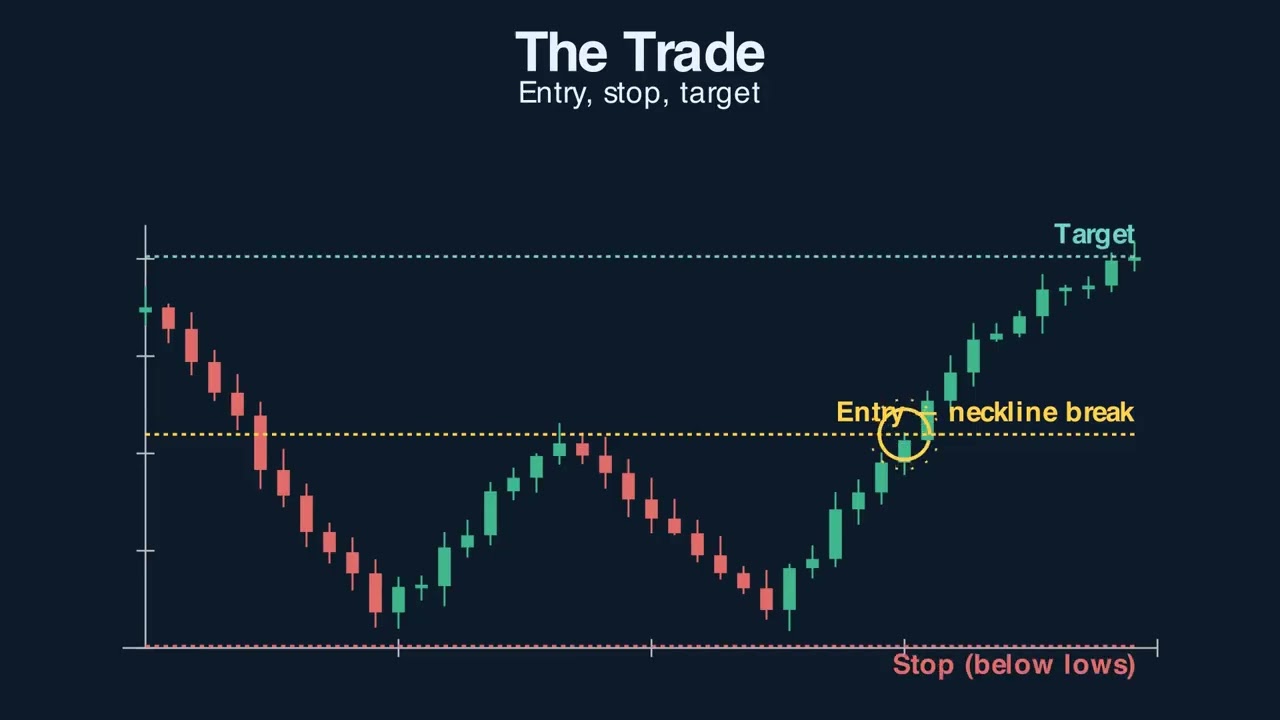
1:23The last two signals are about timing. Momentum confirms there's real force behind the move — when price pushes toward your level, you want RSI rising and volume expanding, not fading. And the trigger is the moment you act: a decisive close through the level, like this breakout. Location gets you ready; momentum and the trigger get you in.
1:45So how do you run this day to day? Four steps. Scan: go through your watchlist for names in a clean trend near a key level. Stack: check whether momentum and a trigger line up with that structure and level. Execute: take the trade with a defined stop and target, only when all four agree. And Review: log every trade, win or lose, so the method keeps sharpening. Scan, stack, execute, review — the same loop, every week.
2:11Let's see it on a real chart. This is a live name on the daily timeframe. Watch the structure trend up into a key level, momentum build underneath, and the breakout candle trigger the entry — four independent signals pointing the same way, at the same time. That alignment, not any single indicator, is the edge.
2:31This is the mindset shift. One signal is a guess. Four independent signals stacked together is an edge. You stop trying to predict the market and start reacting only when the evidence piles up in your favor. Fewer trades, but far better ones. That's the Confluence Method: price action, a key level, momentum, and a trigger — stacked, then run through scan, stack, execute, review. Every other video on this channel plugs into this one system. Subscribe so it all connects, and remember — this is education, not financial advice. Trade your own plan.